Few places rival the Pacific Northwest for unforgettable RV adventures. From the glaciated peak of Mount Rainier to the ancient rainforests of Olympic National Park, Washington’s three major national parks offer landscapes that inspire wonder at every turn. Yet, planning an RV trip through these natural treasures can feel overwhelming with questions about timing, routes, camping options and vehicle preparation.
This guide gives you everything you need to turn your Washington RV adventure from a dream into reality.
Why Washington Is a Premier RV Destination
Washington offers a stunning mix of rainforests, mountains, coastal cliffs and alpine lakes. You can wake up to ocean waves crashing against rocky shores, then drive a few hours to explore subalpine meadows bursting with wildflowers.
RVers appreciate Washington’s well-maintained highway system and abundance of campgrounds designed for larger vehicles. With this solid infrastructure in place, Washington delivers unforgettable experiences, whether you’re seeking dramatic volcanic peaks or peaceful forest trails.
Exploring Washington’s National Parks
Washington’s three national parks offer distinct landscapes and adventures that showcase the Pacific Northwest’s incredible diversity.
1. Mount Rainier National Park
As the most glaciated peak in the contiguous United States, Mount Rainier National Park centers around the iconic 14,410-foot active volcano. Wildflower meadows bloom spectacularly during summer, set against the dramatic backdrop of the park’s iconic volcano. With more than 260 miles of maintained trails, there’s something for every adventurer.
2. Olympic National Park
Spanning almost 1 million acres, Olympic National Park showcases three distinct ecosystems:
- Ancient temperate rainforests drip with moss-covered trees and receive over 12 feet of rain annually.
- The rugged Pacific coastline offers tide pools and sea stacks.
- Glaciated mountains provide alpine hiking and breathtaking vistas.
3. North Cascades National Park
With over 300 glaciers, North Cascades National Park protects more ice than any other U.S. park outside Alaska. This concentration of glaciers feeds turquoise lakes like Diablo and Ross, creating some of Washington’s most photogenic landscapes. Jagged peaks tower overhead, and the North Cascades Scenic Highway delivers front-row access to these dramatic alpine views.
Planning Your Trip
The season you choose shapes everything from weather conditions to crowd size and available activities.
Summer
The best time to visit these parks is generally from late June through September. During these peak summer months, you’ll enjoy:
- Full road access: Mountain passes and high-elevation areas become fully accessible as snow clears from the routes.
- Comfortable temperatures: Daytime highs in the 70s create ideal conditions for hiking and outdoor activities without overheating.
- Wildflower displays: Subalpine meadows burst into colorful blooms, especially in July and early August.
- Extended daylight: Long summer days give you extra hours for exploration and photography, with sunlight lasting well into the evening.
You should know, however, that peak summer season means serious campground competition. Book reservations months ahead to secure a spot.
Spring and Fall
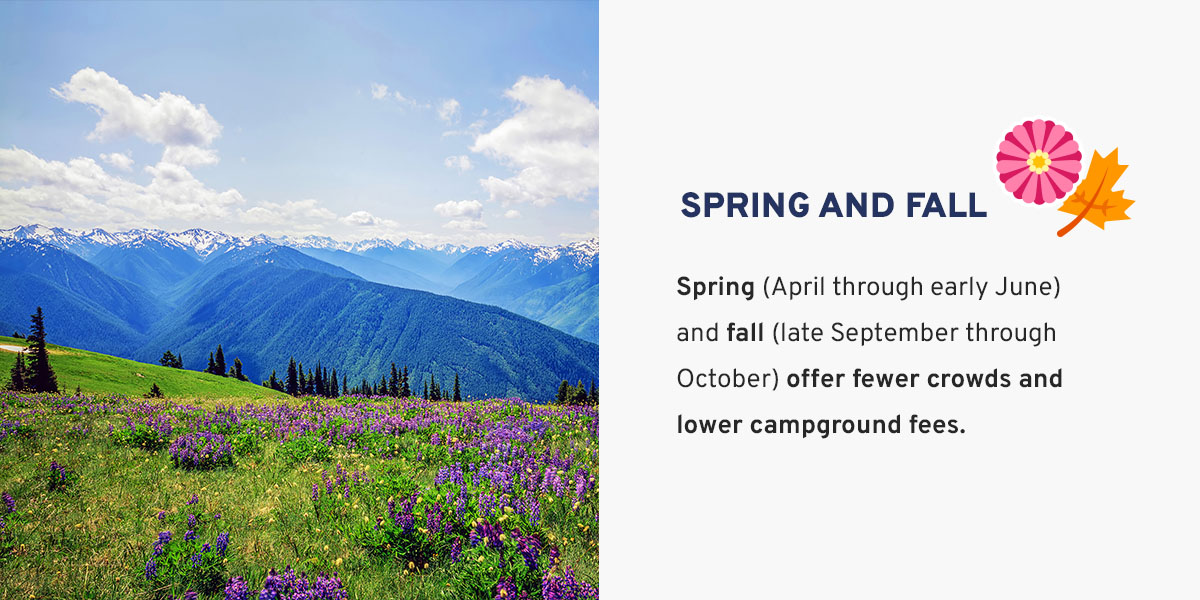
Spring (April through early June) and fall (late September through October) offer fewer crowds and lower campground fees. Here’s what makes these shoulder seasons appealing:
- Lighter traffic: You’ll find campgrounds and trails far less crowded than in the peak summer months.
- Spring wildflowers: Lower-elevation trails burst into bloom before the high country wakes up.
- Fall color: Vine maples and deciduous trees put on brilliant gold and crimson displays.
- Cooler hiking: You can tackle trails without battling summer heat.
The weather gets less predictable during these months — pack extra layers and check road conditions before heading out to stay ahead of surprises.
Winter
Winter (November through March) transforms Washington’s mountain parks into quiet wonderlands. The coldest temperatures and heaviest snowfall arrive in January, creating prime conditions for snowshoeing and cross-country skiing in areas you can reach.
However, reaching those areas becomes the challenge. Winter brings major road closures that limit RV access throughout the mountain parks. To complicate matters, many campgrounds close entirely, and those that stay open often lack water and full hookups. Olympic National Park offers an exception — its coastal and rainforest areas stay accessible year-round, giving winter RVers an appealing alternative to snowbound mountains.
Essential Prep for the Pacific Northwest
Proper preparation ensures your RV handles Washington’s varied terrain and weather while providing a comfortable home base for your adventures.
Choosing the Right RV for Washington’s Terrain
Washington’s mountain parks present distinct challenges, including tight switchbacks on narrow roads, limited parking at trailheads and steep grades that test your vehicle’s power and brakes. The terrain favors compact, maneuverable rigs over large coaches.
Class B and Class C motorhomes handle these conditions best. Their shorter wheelbases allow them to navigate tight turns without tail swing, and most parking areas accommodate their size. Travel trailers and pop-up campers work well, too, if you’re comfortable towing on mountain grades.
Larger options like Class A motorhomes and fifth wheels can access some park areas, but you’ll face restrictions on certain roads and find fewer parking spots. If you’re drawn to destinations like Paradise at Mount Rainier or Hurricane Ridge in Olympic National Park, smaller means easier.
Packing for Four Seasons in a Day
Washington’s weather can be unpredictable. Locals joke about experiencing four seasons in a single day, and you should take this seriously when packing.
Layer your clothing to adapt quickly as temperatures shift. Pack moisture-wicking base layers, insulating mid-layers like fleece and waterproof outer shells. Even during summer, nights cool down significantly at higher elevations.
Your Camping Options in Washington
Washington offers diverse camping options, ranging from developed campgrounds with full hookups to remote dispersed sites for self-sufficient adventurers.
Camping Inside the National Parks
Camping inside the national parks puts you within steps of top trails and attractions, with essential amenities like vault toilets and water spigots at most sites. You’ll generally find accommodations for RVs up to 30 feet in length.
Reservations typically open six months in advance, and popular sites book within minutes for summer weekends. If you’re flexible with timing, arriving midweek or during shoulder seasons increases your chances of snagging a spot.
State Parks and Private Campgrounds
If national park campgrounds don’t suit your needs, state parks usually provide established campgrounds with hookups and facilities. Washington State Parks offer electric and water hookups at many locations, along with amenities such as showers and dump stations. Be sure to review park rules and regulations before your visit.
You can also explore private campgrounds and RV resorts as they offer the most services, including full hookups with sewer connections, Wi-Fi and laundry facilities.
Boondocking
National forest lands surround the parks, allowing dispersed camping in many areas. These off-grid-capable locations offer free camping without amenities or reservations. You’ll need self-sufficiency — full freshwater tanks, adequate waste-holding capacity and power generation.
Start Your Washington Adventure With Bretz RV
Your Pacific Northwest adventure is within reach, and the right RV makes all the difference. Whether you’re drawn to mountain trails, coastal forests or alpine lakes, having the perfect rig transforms your journey from good to unforgettable.
Since 1967, Bretz RV & Marine has helped adventurers across Montana, Idaho and Washington find their ideal rigs. Thanks to our team’s deep understanding of Pacific Northwest travel, we can guide you to an RV that truly fits your needs and budget. Plus, with Montana’s sales-tax-free advantage, you’ll save money for more campground nights. Contact us today at one of our locations to learn more.